Dan Walters on wireless control in modern filmmaking
Wireless lighting control has become a standard part of modern filmmaking, but few people have seen its evolution as closely as Dan Walters.
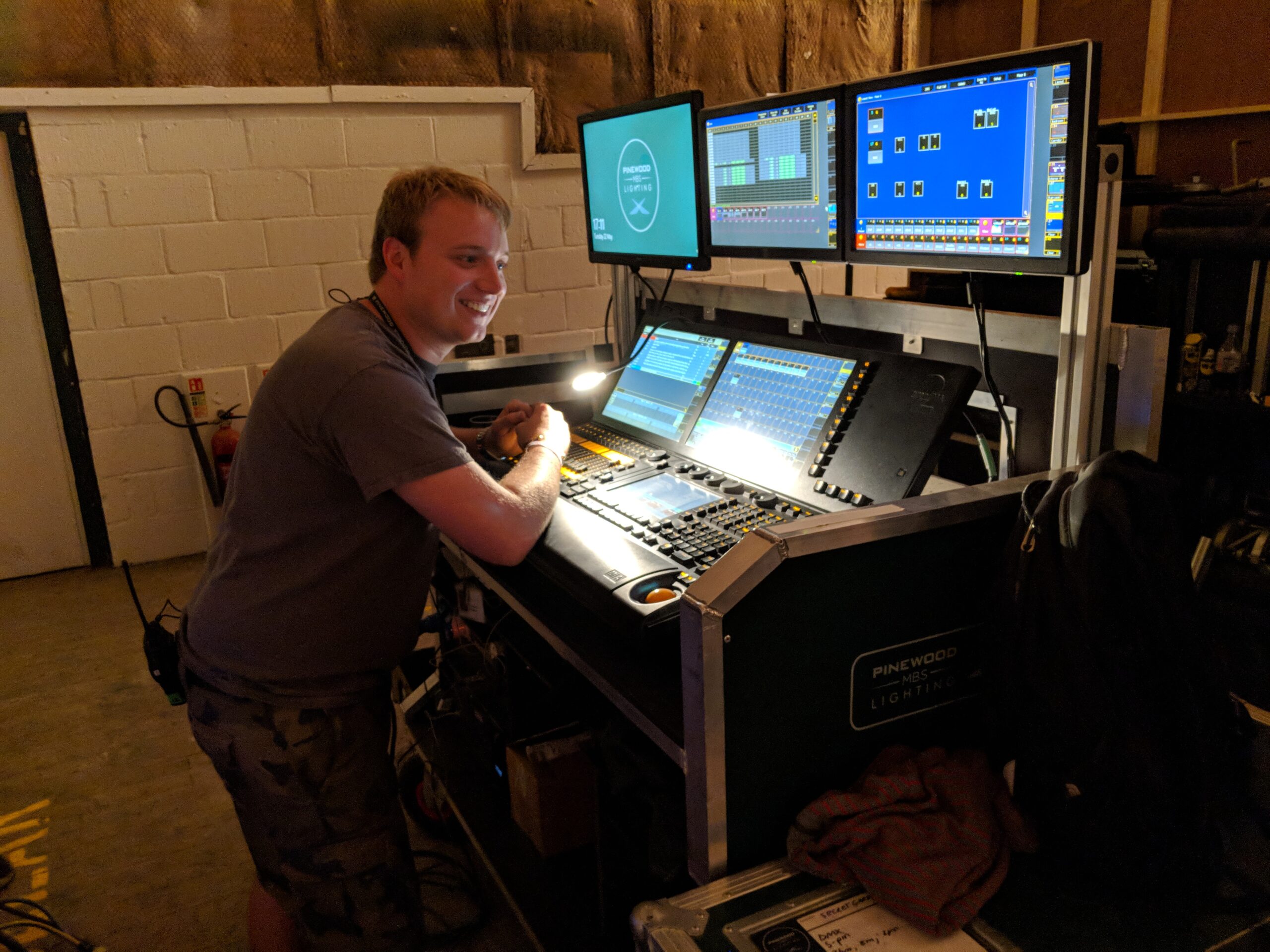
Dan is an experienced Console Operator based in London and member of the International Cinema Lighting Society (ICLS). Coming from a family of electricians and gaffers, he trained to become a certified electrician before moving into rigging and film lighting control. His career has taken him onto major productions including Mission: Impossible, Rogue One and Transformers.

Early wireless control: solving problems that cables couldn’t
Dan first encountered wireless DMX during the production of Mission: Impossible – Rogue Nation in Vienna. The production required lighting positions across multiple rooftops surrounding the Vienna State Opera House, creating logistical challenges that would have been extremely difficult to solve with conventional cabling.
“We needed to backlight every shot,” he recalls. “We had a 20K on every rooftop.”
At the time, wireless control was primarily being used as infrastructure – a way to bridge locations where running cable simply wasn’t practical. The technology worked, but the workflows were still developing.
“We were using LumenRadio wireless receivers and we ran Ethernet and DMX to them. We were completely unaware that they supported Power over Ethernet and could just sample Streaming ACN off the network. We didn’t realise we could achieve it all with one cable. Of course, now we know we can just run a single Ethernet.”
Today, he sees those early deployments as only the beginning of wireless control’s role in filmmaking.
The shift from infrastructure to workflow
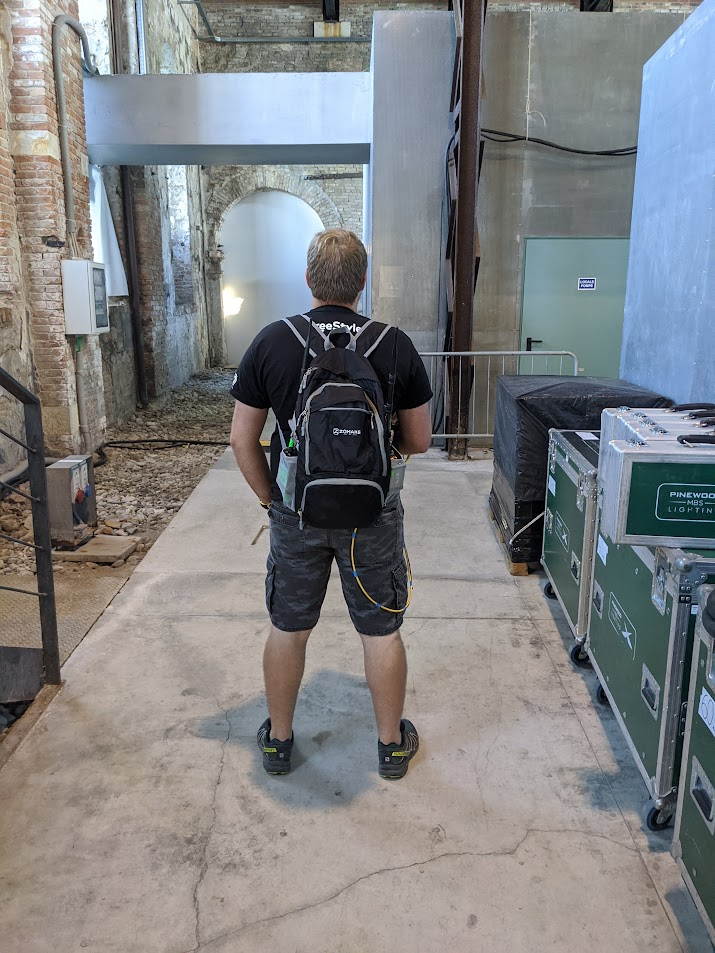
According to Dan, the biggest change has not been in the technology itself but in how crews use it.
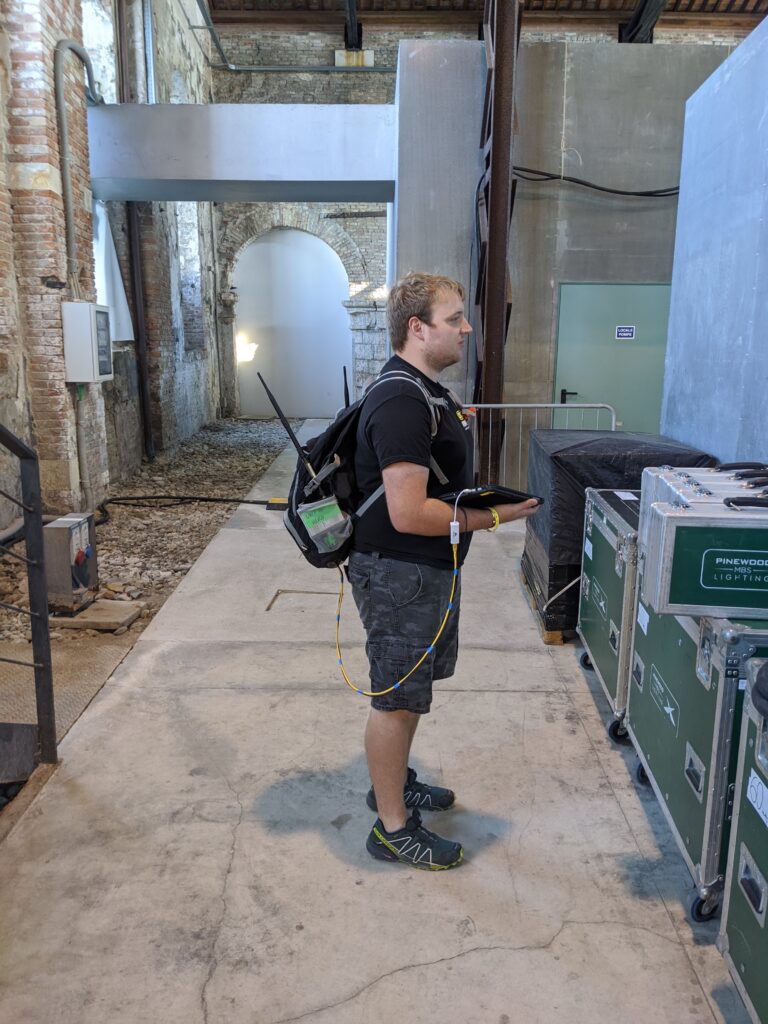
Rather than replacing entire control infrastructures, wireless has become the critical link between lighting control systems and the fixtures that move constantly around the camera.
The widespread integration of CRMX directly into fixtures has accelerated this shift.
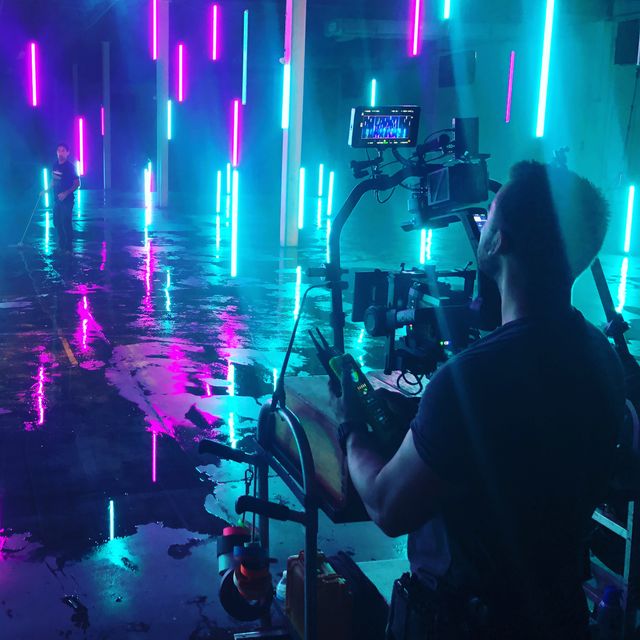
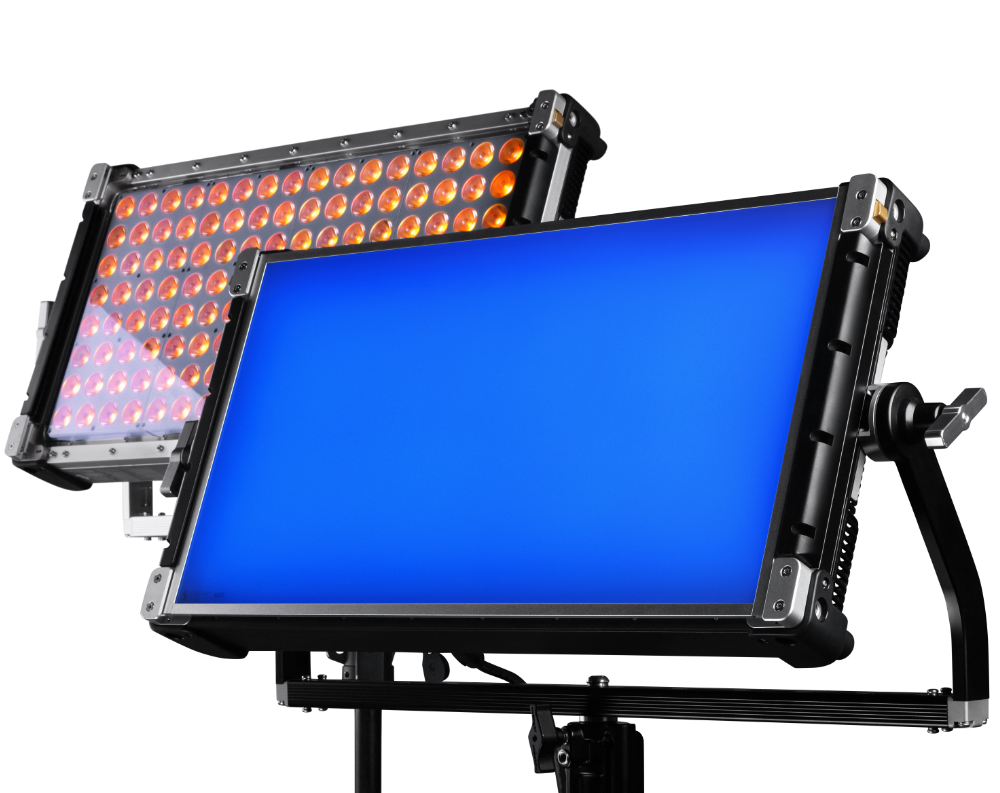
“We’re now not looking at getting a point-to-point system, which we then connect with DMX cable.”
Instead, lighting crews increasingly expect fixtures to be controllable the moment they arrive on set.
“As quick as the team can get them off the truck, turn them on and walk them onto set, there’s an expectation of control.”
Speed around the camera
For Dan, the greatest value of wireless control appears in the constantly changing environment around the camera.
Directors and cinematographers regularly alter fixture positions moments before a take. Lights move from camera-right to camera-left. Fixtures get mounted on boom arms or hidden behind scenery. In those situations, running and re-running cables simply isn’t practical.
“It’s very rare now that you’re given the time around camera to bring in a DMX cable, dip up the address and get it back to set.”
Instead, crews prepare fixtures in advance, assigning addresses, fixture IDs and operating modes before production begins.
“You need LumenRadio for running that in quickly.”
This flexibility allows lighting teams to adapt instantly to creative decisions without interrupting production.
Why CRMX became the standard
Dan also believes that the widespread adoption of LumenRadio’s CRMX by manufacturers, like Astera and Creamsource, has played a major role in establishing wireless control as a standard workflow. The reason is not simply technical performance but operational simplicity.
He clarifies that while other technologies exist, they do not fit the realities of film production.
“I’m not going to be running multiple protocols on a set, when I can have a single transmitter.”
As more fixture manufacturers adopted CRMX, the value of a common ecosystem increased for everyone involved.
The Stardust effect
Dan points to the introduction of Stardust as another turning point.
As productions moved toward LED fixtures with increasingly complex effects and larger channel counts, the limitations of earlier wireless workflows became more apparent.
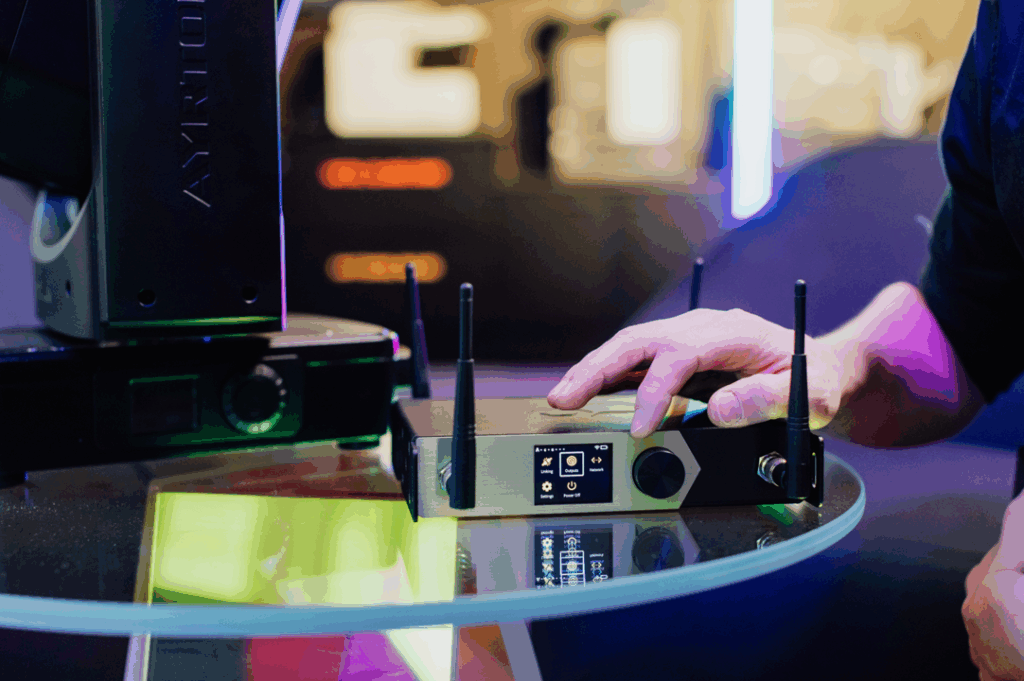
“Then when the Stardust came out, I think people doubled down.”
For Dan, Stardust simplified previously complex systems into a single device. Instead of managing multiple transmitters and separate infrastructure, crews could handle larger numbers of universes and fixtures through a Stardust.
“The Stardust has become the essential Swiss Army knife. It solves so many problems.”
Not a replacement for best practice
Despite his enthusiasm for wireless control, Dan is careful not to portray it as a solution for every situation.
“Wireless should complement, not replace, good rigging practices,” he says. “If somebody presented me with an entirely LumenRadio set, I wouldn’t necessarily say that was a great rig.”
For Dan, it’s not a question of whether wireless is reliable enough, but whether it’s being used in the right place. If power and control cables are already being installed as part of a permanent rig, he believes wired DMX still makes sense. Wireless delivers its greatest value where flexibility, speed and mobility are needed most.
Reliability in a crowded wireless world
Modern film sets contain more wireless devices than ever before, from camera systems and video transmitters to communications and networking equipment. Even so, Dan believes CRMX has proven remarkably resilient.
“LumenRadio, for the most part, is solid,” he says, “Where a lot of other protocols, such as Wi-Fi, are just not.”
His experiences have also taught him where the limits are. In extreme situations, such as surrounding fixtures with multiple high-powered wireless camera systems, signal degradation can still occur.
As Dan puts it: “That’s physics.”
However, he quickly adds that reliability is rarely an issue when systems are deployed correctly.
The lasting impact of CRMX
After more than a decade working with wireless lighting control, Dan sees CRMX as an established and essential part of the professional lighting toolkit.
Not because it replaces every cable, but because it enables the speed, flexibility and responsiveness that modern productions demand.
Wireless control is not magic. It is not perfect. But its impact on filmmaking has been profound.
“The last 50 feet around camera, the speed to work at. That’s where I see LumenRadio just having changed the industry.”