W-DALI wireless control paves the way for smarter, more sustainable lighting
In 2020, the city of Helsingborg in southern Sweden launched a ten-year project to modernize its street lighting. The “Future Lighting” initiative aims to make the switch to smarter lighting by replacing all the luminaires of its approximately 30,000 lampposts with energy-efficient LED lighting.
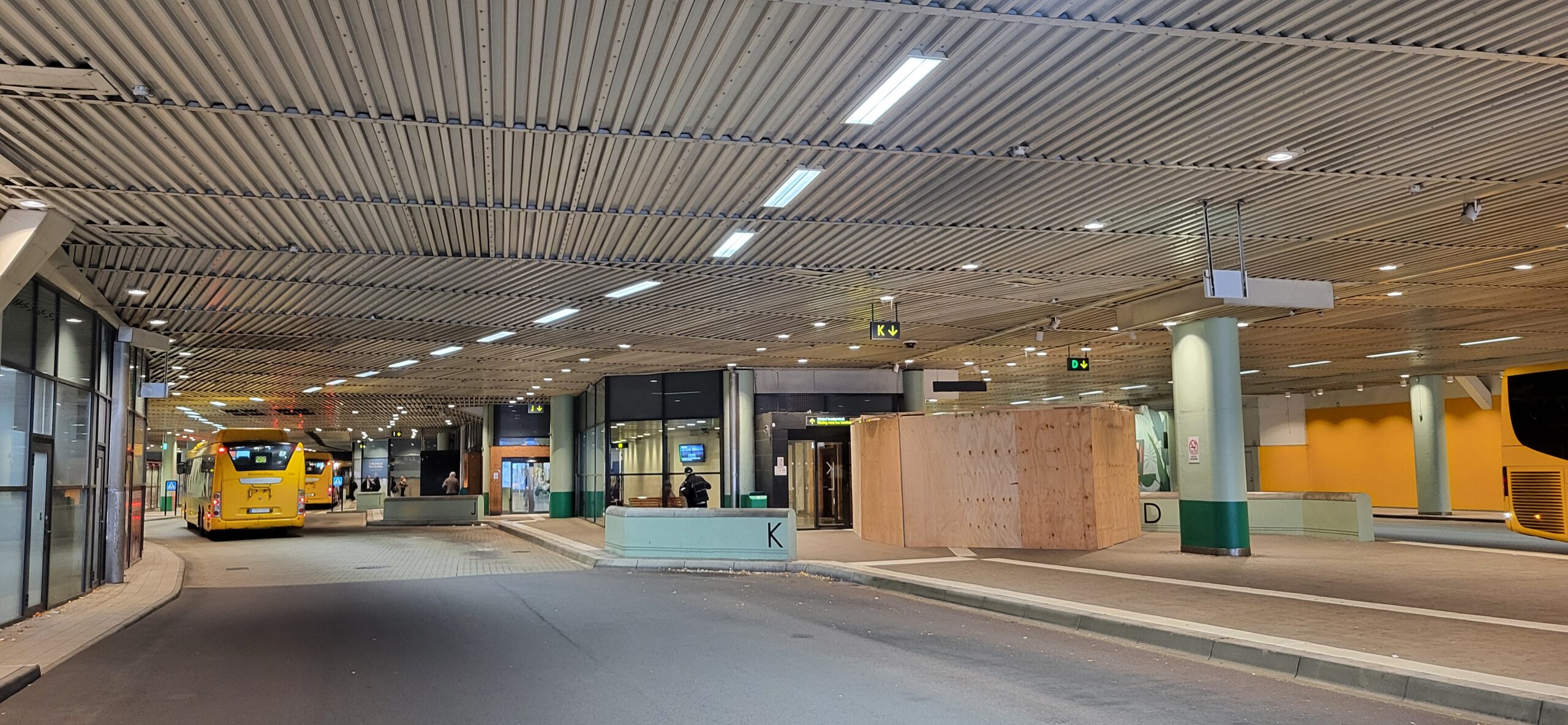
As a part of this investment, Helsingborg also looked to address the use of old fluorescent lighting tubes at its bus terminal in the centre of town. They decided not only to replace the lamps but also to install a new control system to enable adaptable lighting.
Helsingborg turned to a local expert to tackle the bus terminal project: Lighting Designer, Bertil Göransson. Bertil has worked with audio, video and lighting technology for almost 35 years and has spent the last 20 years specializing in lighting. Through his company, Luxera, he offers lighting design and planning services, focusing on public spaces and architecture.
The bus terminal is part of Helsingborg’s central public transport hub which also serves train and ferry passengers and sees around 25,000 travelers passing through each day. Since the bus station combines an indoor and outdoor section, it places greater demands on the lighting system, both in terms of how it is designed and how it is constructed.
The lighting over the bus lanes, for example, require a neutral white light (4000K) for safety and visibility while the pedestrian areas require a warmer, more comforting tone (3000K).
Discovering wireless lighting control
Over 600 fixtures needed to be replaced, around 500 of which were mounted into a large suspended metal ceiling covering the outer section of the terminal, with all the cabling housed above the ceiling.
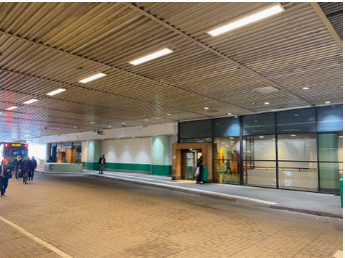
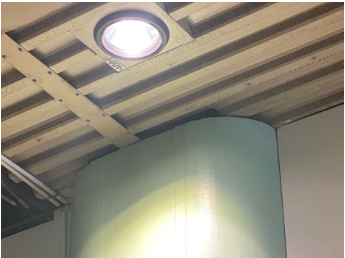
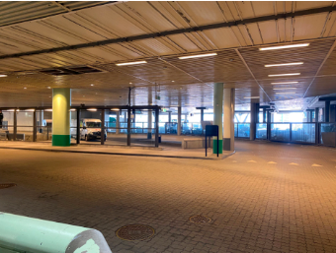
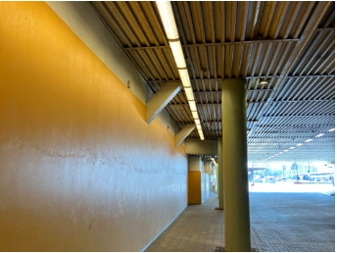
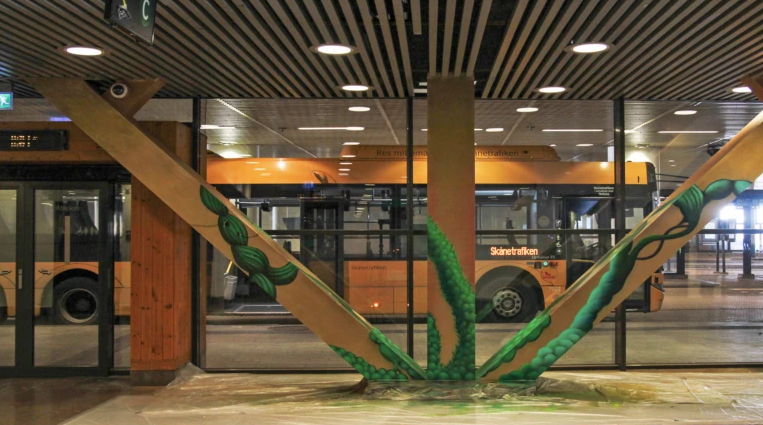
“Replacing each fixture and running new DALI cables to make each one individually controllable presented certain challenges,” explains Bertil. “It was clear from the outset that dismantling the suspended ceiling was going to be a costly and disruptive process.”
The turning point came when Bertil heard about W-DALI, LumenRadio’s wireless alternative to the DALI cable.
“I conducted a pre-study comparing a wired and wireless solution. A wired installation with new DALI control cables would not only have meant closing down parts or all of the bus terminal, but it would also have cost almost double. With W-DALI wireless control, no new cables would need to be run and there would be minimal disruption to traffic.”
Bertil Göransson, Lighting Designer, Luxera
Together with LumenRadio and fixture manufacturer Fagerhult, Bertil came up with an ingenious installation method. Instead of replacing entire fixtures, only the internal insert of each fixture was swapped out. Fagerhult prepared each insert off-site which included the new LED lamp and a W-DALI receiver node to enable wireless control. Each of the fixtures containing an old fluorescent tube could then be swapped out without running new cables or taking apart the ceiling.
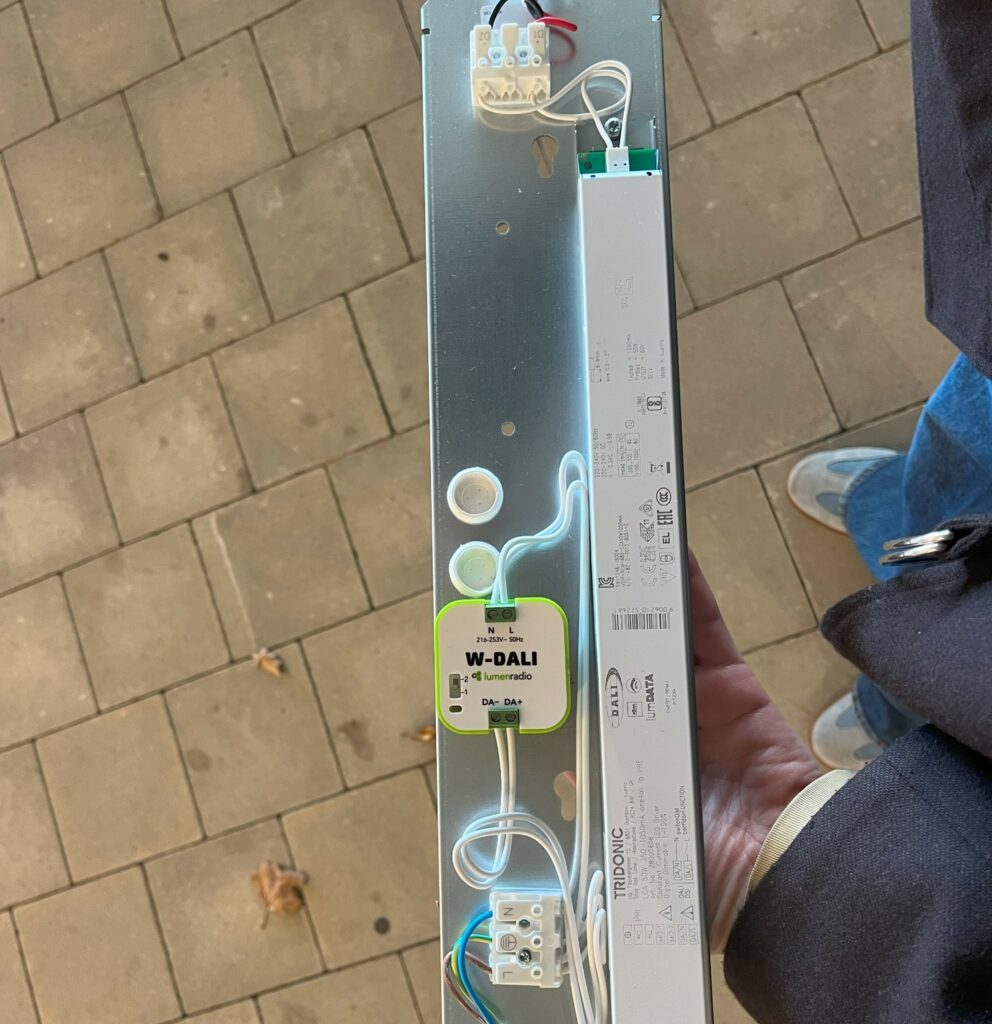
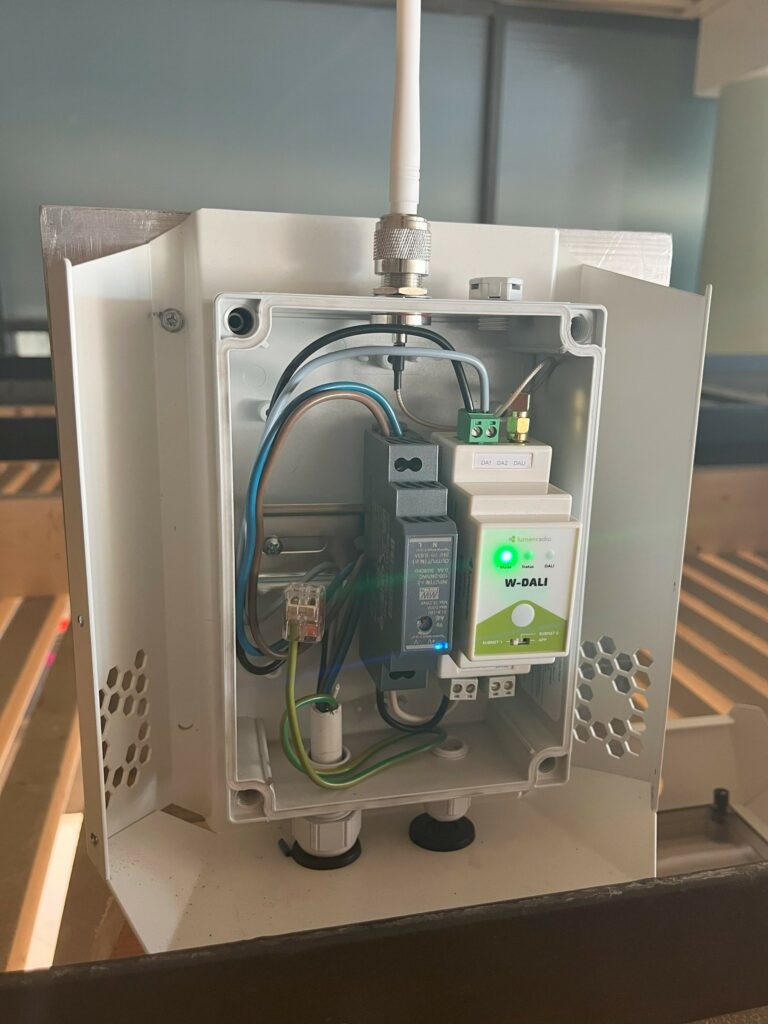
“It made our whole working procedure so much more effective,” states Bertil. “First we installed all of the W-DALI transmitters. We then mounted all the fixture inserts and connected them one by one to the designated transmitter, one subnet at a time. The next step was to create addresses for all the fixtures and finally, program the required scenes.”
For the other types of lamps – such as downlights and surface-mounted lights – the W-DALI receiver modes were mounted differently, in a junction box above the suspended ceiling, adjacent to the luminaire.
The final result – a smarter, more sustainable lighting system
“Thanks to the drastically reduced system power and intelligent wireless lighting control using W-DALI, energy savings are estimated at 86%, with a payback period of only seven years”
Bertil Göransson, Lighting Designer, Luxera
The entire installation involved 623 lighting fixtures organized into 13 wireless DALI subnets. Each subnet was managed by a W-DALI transmitter, placed strategically to maintain signal strength and reliability. The receiver nodes also functioned as repeaters, extending the wireless mesh network’s reach across the large terminal area.
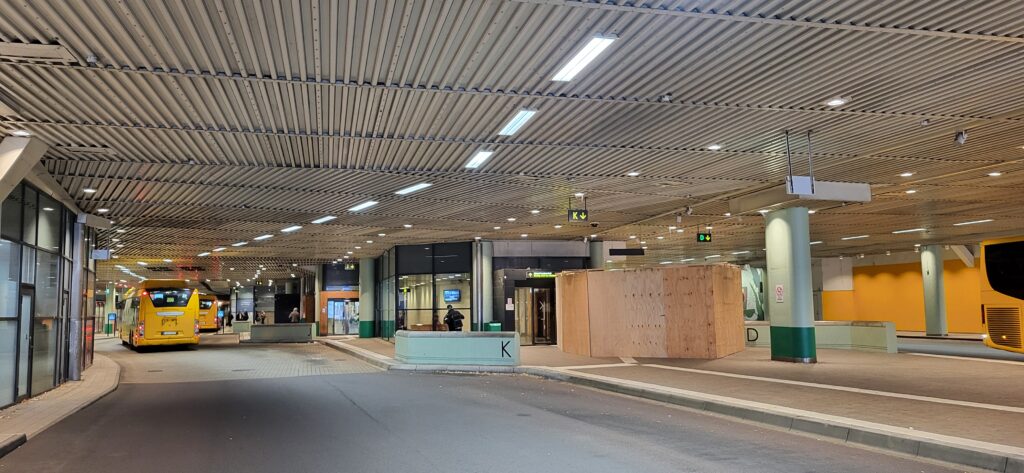
In terms of lighting control, the system was designed with flexibility and energy savings in mind. All fixtures are now individually addressable and connected to Helsingborg’s central CMS via a Pharos controller and the Pharos Cloud platform.
“Lighting scenes can be programmed and adapted according to usage, time of day or seasonal variation,” says Bertil. “Specific zones, such as pedestrian areas, bus lanes and the entry and exit points to the terminal, are controlled independently, ensuring both optimal visibility and minimal energy waste.”
The lighting design, developed in close collaboration between Luxera and White Architects, emphasizes both efficiency and visual comfort. For example, lighting at the terminal’s entrances and exits is balanced to ease the transition between indoor and outdoor environments, helping passengers adjust more comfortably. Initial calculations show that lighting can be dimmed by 40% during the day and up to 60% at night without compromising safety.
The economic impact of this transformation is equally significant.
“Thanks to the drastically reduced system power and intelligent wireless lighting control using W-DALI, energy savings are estimated at 86%, with a payback period of only seven years,” concludes Bertil. “Ultimately, the bus terminal lighting upgrade is a flagship example of Helsingborg’s broader vision: to create a smarter, more sustainable city.”
Get Your Guide to Going Wireless
How to get started with wireless control for DALI lighting