Phased VAV modernization without replacing the LON trunk

How Wireless BACnet enabled a gradual LON-to-BACnet migration at a 119,000 sq ft office building.
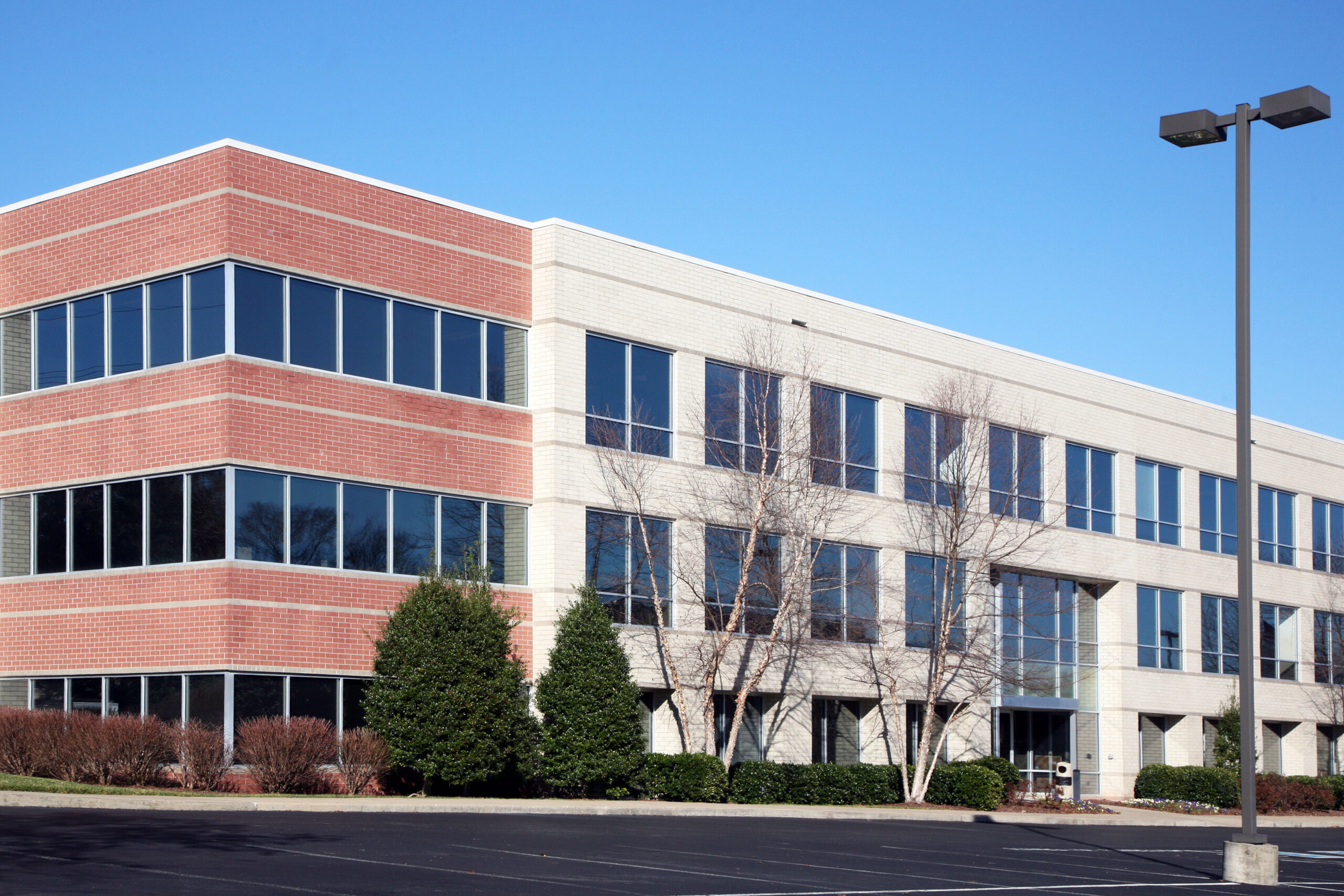
When Conserv Smart Buildings, a building automation specialist in Indianapolis, helped their customer modernize failing VAV controllers at a three-story office building, the goal was clear: restore reliability without forcing a costly, building-wide infrastructure replacement.
By implementing LumenRadio’s Wireless BACnet (W-BACnet) solution, Conserv Smart Buildings enabled a phased upgrade strategy that allowed the property manager Cushman & Wakefield to replace failed devices one at a time — without replacing the entire communication trunk. The result was a flexible, future-proof modernization that minimized capital expense while maximizing long-term control options.
LON protocol failures: the VAV upgrade challenge
The property Woodland Corporate Park VII, a 119,000-square-foot, three-story office building, was equipped with Honeywell Spyder VAV controllers operating on the LON protocol. As controllers began to fail, the building faced a significant challenge: LON is now a discontinued protocol and replacement devices are no longer readily available. Additionally, Honeywell T1L controllers cannot coexist on the same communication bus as LON devices.
This meant the customer traditionally would have had to either:
- Replace all devices on the trunk with T1L controllers, or
- Replace the entire communication bus with BACnet MS/TP or IP
Both options required substantial capital investment — funding that was not available at the time.
The objective was not a full system upgrade. It was to replace failed devices while preserving as much of the existing infrastructure as possible.
How Wireless BACnet enabled a phased VAV replacement
To avoid replacing the entire trunk infrastructure, Conserv Smart Buildings implemented LumenRadio’s W-BACnet wireless solution.
Failed Honeywell LON Spyder controllers were replaced with JCI F4-CVM BACnet MS/TP controllers, connected wirelessly using W-BACnet nodes. The original LON network remained in place, while new BACnet devices were integrated via wireless communication.
The three-story office building required:
- One centrally located W-BACnet gateway per floor
- 5–10 W-BACnet nodes per floor at each VAV box above the dropped ceiling
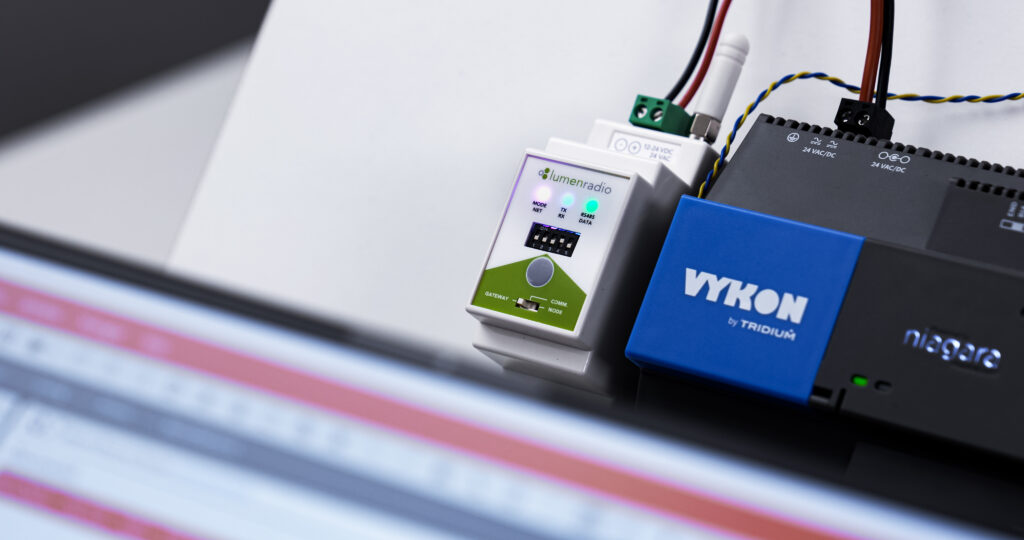
By eliminating the need to pull new communication wiring across all floors, Conserv enabled a phased migration strategy. Devices can now be replaced gradually as they fail, rather than forcing a complete system overhaul.
As Jim Deckard, Service Manager at Conserv Smart Buildings, explains:
“The main benefit for choosing wireless in this case was that the customer gets the flexibility to choose service providers and brands of controls to replace devices as they fail.”
The Wireless BACnet backbone now allows the building owner to select from any BACnet MS/TP-compatible controller brand moving forward — eliminating protocol lock-in and expanding service provider options.
Installation also proved straightforward and reliable:
“Installation and configuration of the LumenRadio W-BACnet devices was very simple. The range and performance were much greater than expected.”
By using wireless, Conserv Smart buildings delivered a cost-effective modernization that restored reliability, avoided major capital expense and future-proofed the building’s automation system.